What Is LEGO® Serious Play®?
The Method Explained for Leaders and Teams
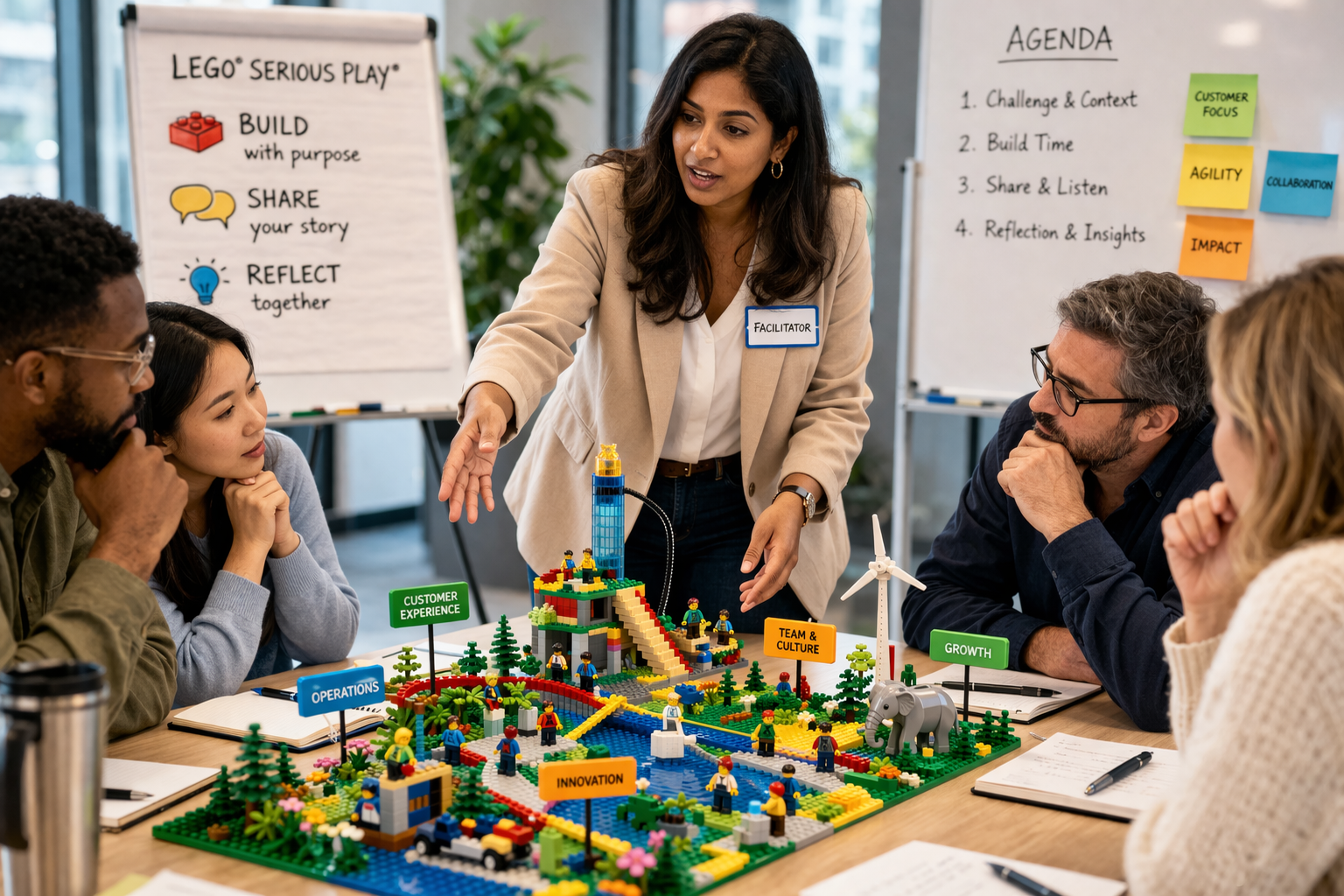
LEGO® Serious Play® is a facilitated workshop methodology that uses LEGO bricks to help teams think, communicate, and solve complex problems together. Its core purpose is to improve shared understanding through hands-on model building, and its primary benefit is 100% participation, because every participant builds, explains, and reflects.

What LEGO® Serious Play® means in organizations
LEGO® Serious Play® is a structured facilitation method for leadership teams, cross-functional groups, and organizations that need clearer thinking, better communication, and stronger alignment. In business settings, the method helps participants build three-dimensional models of ideas, relationships, constraints, and opportunities so abstract issues become visible and discussable.
In 2026, leaders are under pressure to make faster decisions without losing employee commitment. LEGO® Serious Play® helps because it turns hidden assumptions into shared artifacts, which leads to better dialogue and more grounded decisions.
For professionals building facilitation, consulting, or leadership capability, understanding LEGO® Serious Play® matters because it is both a communication method and a strategy method. For organizations, the value is practical: teams can move from vague discussion to visible meaning in a single session.
Systems Thinking
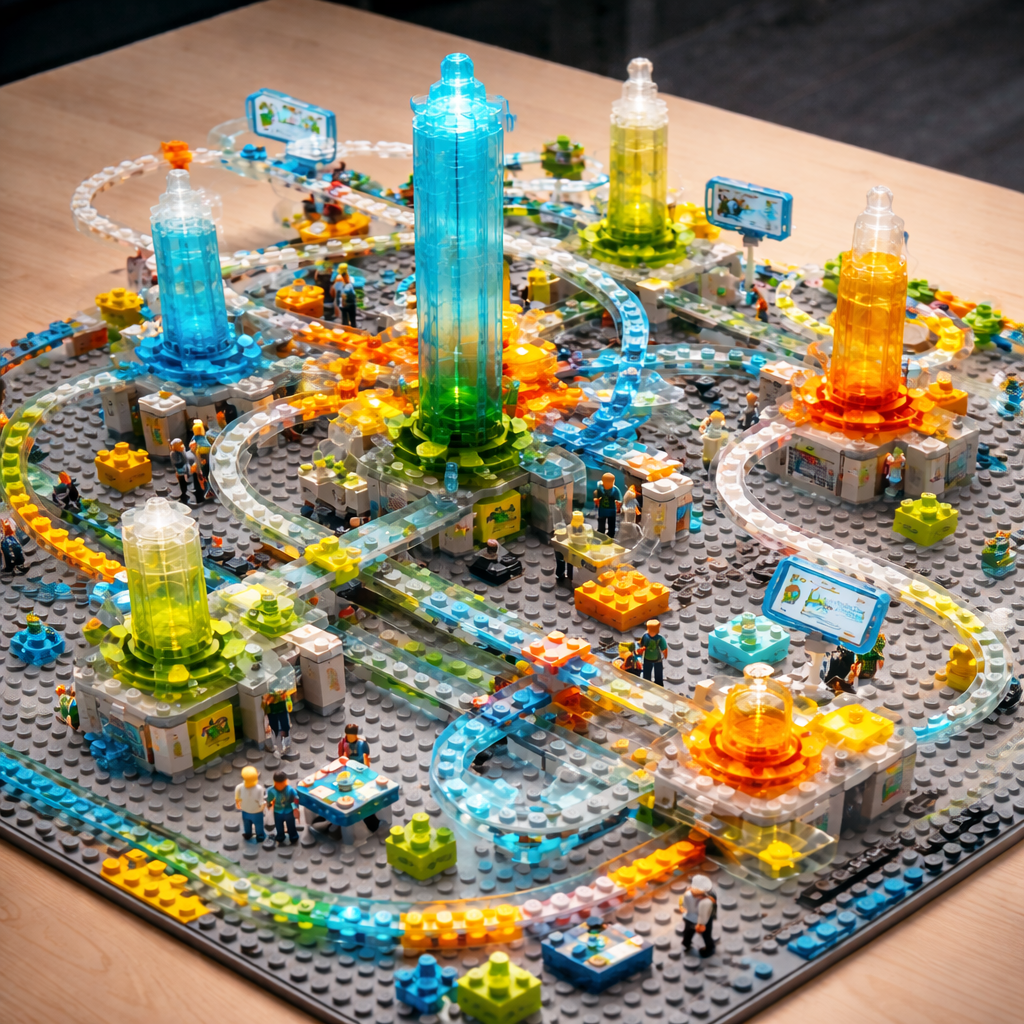
Facilitation turns abstract concepts into physical reality for collective sensemaking.
Why organizations need better problem-solving methods
Most organizational challenges are not caused by a lack of intelligence. They are caused by fragmented perspectives, weak feedback loops, and structural constraints that remain unspoken. Strategy, culture, leadership, and communication operate as interdependent forces, so one unresolved issue often triggers a wider performance problem.
When these issues stay verbal, they remain easy to distort. People simplify, defend positions, or defer to hierarchy. As a result, meetings feel efficient while real understanding stays low.
This is costly. A poorly designed strategy workshop can consume half a day for 8 to 12 people and still produce little ownership. A more structured method often reduces rework by surfacing misunderstandings earlier, which can save weeks of downstream confusion in change, innovation, or leadership initiatives.
Why traditional meetings often fail
Traditional meetings often fail because they reward speed of speech rather than depth of thought. In many rooms, a vocal minority contributes most of the airtime while quieter participants self-edit or disengage.
That pattern is not a personality issue alone. It is a structural issue, because the format privileges confidence, rank, and improvisation over reflection. The result is familiar: partial participation, low psychological safety, ambiguous decisions, and weak commitment after the meeting.
LEGO® Serious Play® changes the interaction design. People build first, then explain. That sequence matters because building slows premature judgment and gives participants time to form meaning before group discussion begins.
Origins, science, and the “thinking through the hands” foundation
The LEGO® Serious Play® methodology originated inside the LEGO Group in the late 1990s. According to LEGO’s official background page, the idea began in 1996 when Johan Roos and Bart Victor, then professors at IMD in Switzerland, worked with LEGO Group owner Kjeld Kirk Kristiansen to explore alternative strategic planning tools and systems.
That origin matters because the method was not created as entertainment. It was created to help organizations think differently about business issues, strategy, and adaptation in complex environments.
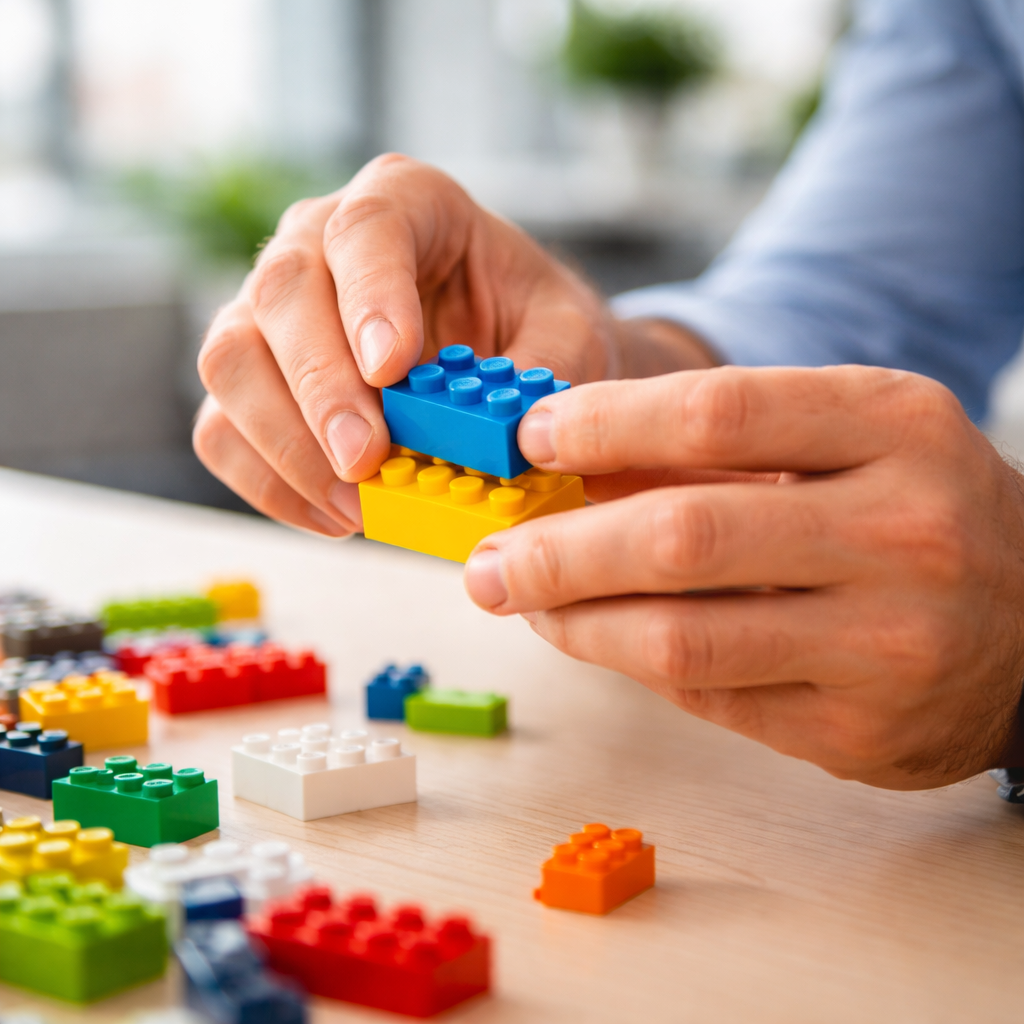
Its scientific authority also rests on the idea often described as “thinking through the hands” or the hand-mind connection. Every stage of the process involves building first rather than merely talking. Physical objects help participants externalize ideas, test metaphors, and reveal emotional or cognitive material that purely verbal discussion can miss.
Psychologically, metaphorical building makes tacit knowledge easier to express. Participants can represent tension, risk, trust, or dependency in concrete form, leading to richer reflection than abstract opinions alone.
The 4-step LEGO® Serious Play® process
Separating thinking, expression, and interpretation.
The Challenge
The facilitator asks a carefully designed question. The question must be specific enough to focus attention and open enough to invite multiple valid interpretations.
Building
Each participant builds a model in response to the challenge. Building externalizes thought, as participants translate ideas into physical form instead of relying on immediate verbal explanation.
Sharing
Every participant explains the meaning of the model. This creates equal airtime and supports 100% participation, because each model becomes the basis for each person’s voice.
Reflecting
The group explores patterns, connections, and tensions across the models. This is where system-level insight emerges and shared understanding solidifies.
Why LEGO® Serious Play® works in practice
LEGO® Serious Play® works because it creates a structured loop between action, reflection, narrative, and shared meaning. Participants do not simply report opinions. They build representations, explain the significance, listen to other interpretations, and then integrate what they learned into a broader system view.
This process improves participation and recall because the method engages visual, spatial, verbal, and kinesthetic channels together. It also improves commitment because people are more likely to support outcomes they helped create and articulate.
In practice, facilitators often see sharper insight within 60 to 90 minutes than many teams achieve in several conventional meetings. That does not happen because the method is magical. It happens because the workshop design reduces ambiguity, increases engagement, and makes relationships between issues more visible.
The safety principle: no right or wrong answers
“This principle is essential because it protects contribution before evaluation.”
A core principle of LEGO® Serious Play® is that there are no right or wrong answers in the building phase. Participants are not asked to produce the “best” model. They are asked to build a meaningful model. That difference creates a safer environment for diverse perspectives, including perspectives that might remain hidden in a conventional discussion.
This safety factor supports inclusion because the model carries the idea. People can speak through what they built, which reduces fear of being interrupted, dismissed, or judged too early. As a result, teams often surface emotional realities, conflicting assumptions, and practical constraints that would otherwise stay invisible.
LSP Meetings vs. Traditional Meetings
| Dimension | LEGO® Serious Play® Meeting | Traditional Meeting |
|---|---|---|
| Participation | 100/100 participation structure | Often shaped by a vocal minority |
| Communication | Ideas are built, shown, and explained | Ideas are mostly verbal and abstract |
| Psychological safety | No right or wrong answers during building | Early judgment often limits contribution |
| Insight quality | Hidden assumptions become visible | Assumptions often remain unspoken |
| Collaboration | Shared models create common language | Different meanings stay disconnected |
| Decision ownership | Higher commitment through contribution | Lower ownership after top-down discussion |
| Strategic thinking | Systems, dependencies, and feedback loops become concrete | Complex interdependencies stay vague |
How a corporate workshop is typically implemented
A high-quality workshop is not improvised. It is designed carefully because the challenge framing, room flow, timing, and facilitation prompts shape the outcomes.
Warm-up and skills building (20-30 min)
The facilitator introduces the method, establishes participation norms, and runs short build exercises so participants understand metaphor, storytelling, and reflection.
Individual challenge builds (30-45 min)
Participants respond to focused prompts such as: “Build the biggest barrier to strategic alignment in this team.” Each person builds silently first and then shares meaning.
Shared themes and system mapping (45-75 min)
The facilitator helps the group identify recurring patterns, structural constraints, dependencies, and enabling factors. Individual models may be connected into a shared landscape.
Scenario testing and future-state design (45-60 min)
The group explores strategic possibilities, risks, or future operating conditions by adapting the shared model. This stage helps teams think beyond immediate symptoms.
Action extraction and close (20-30 min)
The facilitator translates the workshop into strategic implications, practical commitments, and decision-ready outputs.
Where the method creates the most value
LEGO® Serious Play® is especially useful when the challenge involves ambiguity, misalignment, or competing interpretations. That is why the method is often applied in leadership development, strategic alignment, innovation, team effectiveness, and culture work.
Within Leadership with LEGO Serious Play, the method helps leaders examine role expectations, decision patterns, and systemic blockers to alignment. In LEGO Serious Play for Team Building, it helps teams build trust, clarify interdependence, and surface the conditions required for better collaboration.
Success Proof: Case Examples
PwC Luxembourg: Describes LEGO® Serious Play® as a way to enhance creativity and problem-solving, noting its use for strategic thinking, innovation, and stronger team dynamics.
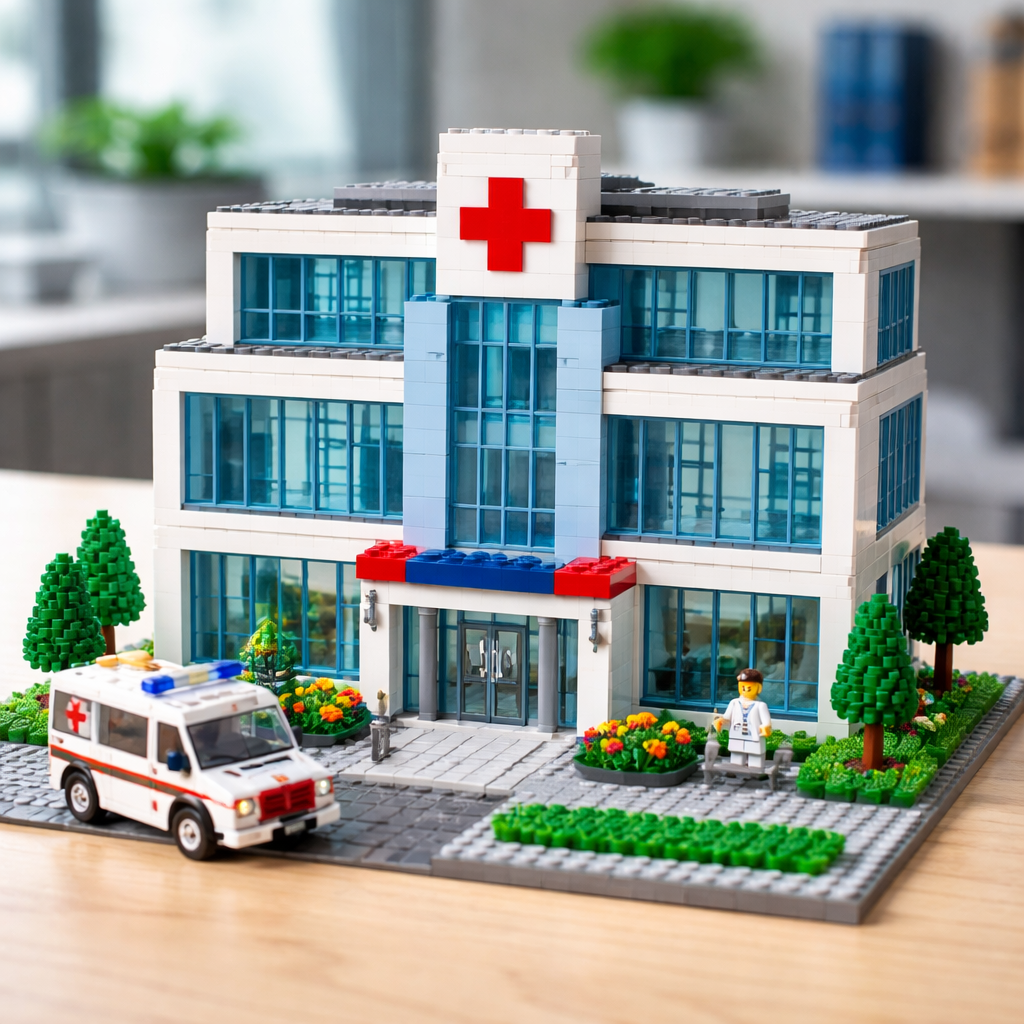
Healthcare: Co-designed emergency department models with broad involvement across roles and a reported positive implementation outcome.
Education: Australian university used LSP to envision research-based curriculum design through a systems lens, integrating actors and competing priorities.
How to work with a trained facilitator
A trained facilitator matters because the value of LEGO® Serious Play® depends on process quality, not just materials. The bricks are tools. The workshop architecture is the intervention. A capable facilitator designs the challenge sequence, protects equal participation, and translates output into business relevance.
Serious Play Business explicitly offers online LEGO® Serious Play® certification pathways, including Foundational and Advanced options, led by Dr. Denise Meyerson, one of the original four Master Trainers.
View Certification Options →